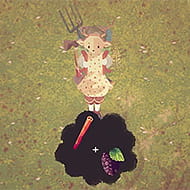








The Garden Path looks like a cozy farming sim you can finish in a weekend, but it plays like a calendar you have to actually live with. Time here runs alongside the real world — each in-game day still stretches across a full 24-hour clock, and the whole yearly cycle unfolds over 28 real-world days, which means the garden keeps growing whether or not you’re the one watching it.
| Genre | Slice-of-Life Sim |
| Platform | Steam, itch.io, Nintendo Switch |
| Modes | Single-player, local co-op |
| Time Cycle | Four seasons across 28 real-world days |
A Garden That Keeps Its Own Clock
Most sims let players ignore the passage of time until they’re ready to engage with it. The Garden Path doesn’t offer that luxury, and that’s deliberate. Because a full year takes 28 real-world days to complete, a task left half-finished on a Tuesday is still half-finished when you log back in on Thursday. Some players find this rhythm meditative — a good excuse to check in for ten minutes between other things. Others find it frustrating, especially if a busy week means an entire in-game season slips by unattended.
This is one of the more openly debated aspects of the game. Community discussions return to it constantly: is a garden that grows without you a feature or a flaw? There’s no universal answer, and the developers haven’t tried to force one — the system stays exactly as designed, real time and all.
Early on, the pace feels slow almost by necessity. You’re given a small allotment, basic tools, and very little direction beyond “start growing something,” which throws a lot of new players off before they realize the slowness is the entire point.
Meeting Thom and the Garden’s Regulars
The Garden Path isn’t populated by silent NPCs standing in fixed spots. Characters like Thom show up with specific requests — collecting journal pages, delivering harvested items, or simply checking in on how the garden’s coming along. Once you reach the point of gathering journal pages for Thom, the story layer of the game becomes much clearer, revealing pieces of who tended this garden before you arrived.
Not every task explains itself well. Players have run into situations where an item needed for a request, such as dust flies destined for the pigeon holes system, doesn’t behave the way the interface suggests it should. That confusion shows up often enough in community threads that it’s worth knowing going in: the fix usually involves double-checking exactly which request box a shopkeeper is asking for, since the interface doesn’t always make it obvious.
Growing Difficult Plants Like Spearmint and Watermint
Not every harvestable in The Garden Path grows on the first try. Spearmint and Watermint in particular have built a small reputation in player discussions as crops that resist straightforward planting, with some players reporting they still can’t get either to take root even after multiple seasons of attempts. That’s a genuinely divisive point among players — some see it as intentional gardening realism, others as an unclear system that needs better in-game explanation.
Myrtle, one of the garden’s residents, becomes relevant here too. Certain harvestables, like cloves, only became obtainable from Myrtle after a patch adjusted what she offered, which is a good example of how the garden’s ecosystem has shifted meaningfully since launch rather than staying static.
The Shrine Stash and Slow Collection
One system worth understanding early is the stash by the shrine — a storage spot many players use to organize journal pages, early fishing gear, and harvested goods before they’re needed for a specific request. It functions less like inventory management and more like a personal archive of the garden’s early days, and returning to it later in a playthrough often triggers small realizations about how far things have come.
By the time you’ve filled several seasons’ worth of the stash, the garden itself looks noticeably different — new plantings, new visitors, and small structural changes that accumulate quietly rather than through any single dramatic event.
Local Co-Op and Shared Progress
A second player can join at any time through local co-op, sharing the same inventory and splitting tasks like harvesting and trading with traveling merchants — so yes, two players can absolutely share progress together in The Garden Path, provided they’re comfortable coordinating around one shared set of resources rather than separate ones. This works well for players who treat the garden as a shared project rather than a solitary retreat.
Completionist players tend to use co-op sessions specifically to speed through repetitive harvesting, while more narrative-focused players often prefer playing solo so they can read every piece of dialogue Thom and the other visitors offer without a second player rushing ahead.
Conkers, Travelers, and the Game’s Social Side
Beyond farming, The Garden Path includes a lighter social side — friendly matches of Conkers against visiting travelers, and an ever-changing cast of characters who come and go across a playthrough rather than settling permanently. This turnover keeps the garden feeling lived-in instead of static, since a face you got used to seeing might genuinely be gone a few in-game weeks later.
Once several travelers have passed through, longtime players start to notice patterns in who tends to return and who doesn’t, which becomes its own small game of observation running alongside the actual farming.
None of that would matter if the garden itself weren’t worth returning to, but it is — a place where a fully grown patch of Watermint or a completed page collection for Thom feels earned specifically because The Garden Path never rushed you toward it.