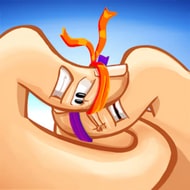








What actually happens when your thumb gets pinned twice in a row and the round is already slipping away? In Thumb Fighter, that’s the exact moment most fights are decided, because the game’s entire structure builds toward those two or three trapped presses rather than a long grind of damage.
| Genre | Physics-based thumb wrestling |
| Modes | Single-player vs CPU, local two-player |
| Core Mechanic | Trap the opposing thumb by pressing down at the right angle |
| Win Condition | Successfully trap the opponent’s thumb two to three times |
The Trap Mechanic Behind Thumb Fighter
Tapping your side of the screen doesn’t just push your thumb forward, it applies pressure, and pressure only counts as a trap when your opponent’s thumb is angled upward and exposed. This is the detail beginners miss most often in Thumb Fighter: mashing taps as fast as possible tends to waste presses on angles that can’t actually be trapped, while a slightly slower, better-timed tap lands the pin that matters.
Because both players are working with the same limited toolkit, most matches come down to reading the opponent’s rhythm rather than reacting to a visual cue. That’s a different skill than most tap-based browser games ask for, and it’s part of why Thumb Fighter has stayed a party-game staple for local two-player sessions.
Skins, Progression, and Why Cosmetics Matter Here
Thumb Fighter ships with over a dozen thumb skins from the start, and winning fights unlocks a steady stream of additional ones. None of them change the underlying trap mechanic, but they do change how easy it is to read your opponent’s thumb angle mid-fight, which matters more in local multiplayer than most players expect.
Players who stick to single-player mode against the CPU opponent tend to underrate this. The CPU telegraphs its trap attempts a little more consistently than a human opponent will, so skins that improve visual clarity matter far less there than they do in a tense local match where both players are bluffing angles.
- Single-player mode: Face a CPU opponent with progressively tighter timing windows, good for learning the trap mechanic without pressure.
- Local two-player mode: Both players tap their own side of the same device, trading reads and bluffs in real time.
- Skin unlocks: Earned through wins rather than purchases, giving longer sessions a visible sense of progress.
Common Mistakes Early in the Game
Early in the game, most losses come from over-committing on the first exchange. A player who lands one early trap often assumes momentum carries them through the match, but Thumb Fighter resets pressure after every trapped attempt, so the second and third traps require the same careful angle-reading as the first.
Button-mashers eventually hit a wall.
The game rewards patience over aggression far more than its cartoonish thumb characters suggest, and that mismatch between tone and mechanical depth is exactly what keeps veteran players coming back for quick rematches.
Where Players Disagree
The most common complaint around Thumb Fighter is that the CPU difficulty in single-player mode can feel inconsistent, easy for several fights and then suddenly precise in its trap timing. It’s a fair point, and most experienced players agree the game is genuinely better with a second human player on the other side of the screen.
How do you win a match in Thumb Fighter?
Thumb Fighter turns a childhood hand game into something with real mechanical depth, and once you’ve felt the satisfaction of reading an opponent’s angle and landing that second clean trap, the game’s simple presentation stops feeling like a limitation and starts feeling like the joke that makes the whole thing work.