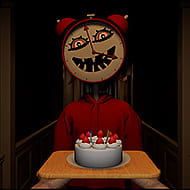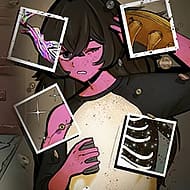








You hear a goat bleat drop into your headphones and you get exactly one shot to bleat it back before the timer runs out. Mimic Party doesn’t slow down for you — if you laugh mid-take or crack on the high note, that’s the recording everyone at the table hears.
| Genre | Party / Casual |
| Players | 1–5, online only |
| Developer / Publisher | FoliesAPP |
| Release Date | August 27, 2026 |
| Round Length | Roughly 10 minutes per game |
Sound Packs and the One-Shot Rule in Mimic Party
Every round the whole table hears the same reference sound at once, drawn from a themed sound pack — animals, machines, human voices, whatever the lobby picked. Everyone records on the same countdown, then the takes play back one after another while the room reacts live. There’s no retry button and no rehearsal; whatever left your mouth on the first attempt is the take that gets scored. A local AI grades melody, rhythm, and attacks rather than tone or timbre, so a deep voice and a high voice doing the identical shape score the same. That distinction matters a lot once you’ve played a few rounds, because it means the game rewards timing and contour over raw vocal talent.
Beginners usually lose points by treating the countdown as a warm-up instead of the actual take. The instinct is to test your voice quietly first and commit on the “real” attempt, but there is no second attempt — the countdown *is* the recording. Players who do well tend to commit to the first sound that comes to mind rather than second-guessing the pitch mid-breath.
- Casual groups tend to favor the goofier sound packs since a flubbed goat bleat is funnier than a flubbed melody.
- Competitive players gravitate toward packs with clean, distinct pitch curves because the scoring rewards precision over comedy.
- Streaming-focused players lean on the chaos of the wheel for content, since a well-timed sabotage lands better on camera than a clean take.
How the Wheel Escalates Every Round of Mimic Party
Between rounds, a wheel spins for the whole table simultaneously, handing out bonuses, score multipliers, and sabotages. Landing a sabotage lets you pick a target whose next take comes back altered before anyone else hears it — saturated, echoing, chopped into pieces, or, in the harshest case, swapped outright for a fart sound that replaces their voice entirely. The sabotaged player doesn’t find out until their take plays back, which is usually the loudest moment of any given match.
By the third or fourth round, most tables have somebody sitting on a multiplier and somebody nursing a grudge from an earlier sabotage. That escalation is really the whole shape of a match: early rounds establish who can actually hit a pitch, later rounds turn into a scramble over who gets sabotaged next.
Reading the Room Without Talking
Voice chat runs the entire game except during a take itself, when the whole lobby is automatically muted so everyone hears the identical recording. The instant it ends, mics reopen right as the reaction lands. That half-second of forced silence followed by everyone yelling at once is the detail players bring up most in community threads — it’s a small technical choice that ends up doing most of the comedic heavy lifting.
Not every review has been kind to the format. Mimic Party currently sits at a mixed rating on Steam, and a chunk of that feedback comes down to matchmaking with only five players and no larger lobby option, which some regular groups find limiting once they’ve exhausted the free sound packs.
Building and Sharing Packs on the Workshop
Sound packs aren’t locked to whatever ships in the box. Steam Workshop support lets anyone build a pack and publish it in a few clicks, and the lobby screen shows exactly who’s still downloading a pack before a match can start. This is where the long-term replay value sits — official packs cover animals and machines, but the community has already started filling in gaps like specific accents, instruments, and meme sounds.
Is Mimic Party playable solo?
No — the store page lists it as an online 1–5 player game, and matches require a live connection even at the low end of that range, since the entire scoring wheel and take playback depend on the whole table hearing results together.
How does scoring actually work in Mimic Party?
The local AI compares your take’s melody, rhythm, and attack pattern against the reference sound rather than judging your actual voice, which is why the game explicitly doesn’t penalize pitch range or vocal texture.
What do sabotages do?
A sabotage drawn from the wheel alters a target’s next recorded take before playback — options include saturation, echo, pitch shifting, chopped audio, or a full swap for a fart sound, and the victim only learns which one hit them when their take plays for the table.
Mimic Party works because it strips away the parts of party games that let people hide — there’s no retake, no muting yourself out of embarrassment, and the wheel guarantees that eventually everyone eats a sabotage. Between the one-shot takes and the constant threat of losing your voice to a fart sound mid-round, it’s less a singing game than a nerve game, and that’s exactly what keeps groups coming back for another spin of the wheel.