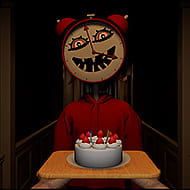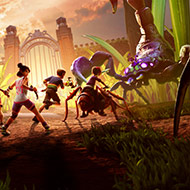








What actually happens the moment a jumpscare makes your hand jerk while you’re mid-delivery? In Don’t Drop The Cake, the answer is immediate: the cake you’ve been carrying wobbles hard, tips, and hits the floor, and the run is effectively over right there. That single consequence is the entire design philosophy of the game compressed into one mechanic.
The Wobble Mechanic Nobody Explains Up Front
Don’t Drop The Cake hands you a cake that never sits still. Using the mouse, you counter its natural sway as you walk, and the wobble intensifies the moment something startles you, whether that’s a sudden noise or one of the twisted beings stepping into view unexpectedly. It sounds simple written out, but the game leans hard on the gap between knowing that intellectually and actually keeping your hand steady when something jumps out at you.
Beginners consistently overcorrect. The instinct when the cake tips is to yank the mouse hard in the opposite direction, and that oversteering is usually what finishes the job the jumpscare started. The better habit, and one experienced players mention constantly in comments, is to stop moving entirely for a beat and let the wobble settle before continuing.
There’s also a rhythm to it that only becomes obvious after a few failed attempts: tight corridors demand smaller, slower corrections, while open rooms give you more room to recover from a bad wobble before it becomes a fall.
None of this is spelled out anywhere in the game itself, which is part of why so many first attempts end in the opening minute.
Twisted Beings and How Don’t Drop The Cake Escalates
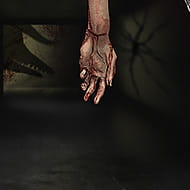
The prologue introduces its twisted beings gradually, giving you space to learn the wobble mechanic before layering on a real threat. Once you’re past that opening stretch, encounters get tighter together, and the game starts asking you to manage the cake and a nearby threat at the same time rather than one after the other.
This is where the player base splits a little. Some enjoy how quickly the difficulty ramps once the twisted beings show up in numbers, treating it as the game finally showing its teeth. Others, especially players coming in expecting a slower survival-horror pace, feel the jump from calm hallway to active threat happens a touch too abruptly for a game built around fine motor control rather than combat.
Either way, by the time you reach the later sections of the prologue, standing still to stabilize the cake is no longer a safe default, since a twisted being closing distance while you wait it out creates its own kind of pressure.
Reading the Story Without Spoiling It
Don’t Drop The Cake never tells you upfront why you’re carrying the cake or who it’s for, and that mystery is deliberately paced out across the run rather than dumped in an opening cutscene. Small environmental details hint at the answer well before anything is confirmed outright.
What Carries Over Between the Prologue and the Full Release
- Save data continuity. Progress made in the demo version carries directly into the full game once it releases, so early runs aren’t wasted time.
- Story fragments. Details uncovered during the prologue about the cake’s purpose are expected to connect directly into the larger story once more stages are added.
- Difficulty familiarity. The wobble mechanic doesn’t change structurally between versions, so time spent mastering it now stays useful going forward.
This continuity is a big part of why the community treats the prologue less like a demo and more like the actual first stage of a longer game, which lines up with how the developers themselves describe it.
Where Players Disagree About the Difficulty
The most common complaint isn’t the horror elements themselves but how unforgiving a single mistimed jumpscare can feel. One bad flinch and the cake is on the floor, with no partial recovery window if the wobble crosses a certain point. Players who enjoy tense, precision-based horror describe that harshness as the entire appeal; players who came in expecting a more forgiving experience find it punishing in a way that occasionally feels disconnected from skill.
Streamers in particular tend to gravitate toward Don’t Drop The Cake specifically because of that unforgiving instant-fail moment, since a live jumpscare reaction reads well on camera.
Completionists chasing every story detail, meanwhile, tend to replay early sections repeatedly not because they failed, but because backtracking is the only way to catch environmental clues they missed the first time through.
- Does the demo save carry over to the full game? Yes. Progress from the prologue and demo versions is designed to transfer into the full release once it launches, so early attempts aren’t wasted.
- How do you stop the cake from falling? Keep mouse movements small and let the wobble settle after a scare rather than overcorrecting. Standing still briefly during a spike in instability is usually safer than continuing to walk.
- Who are you delivering the cake to? The game doesn’t answer this directly in the early sections. It’s revealed gradually as the story progresses, with the full explanation reserved for later stages of the full release.
Don’t Drop The Cake succeeds by making an object as mundane as a cake feel like the highest-stakes item in the room, and once a twisted being crosses your path while your hand is already shaking from the last scare, you understand exactly why the title is a warning rather than a suggestion.