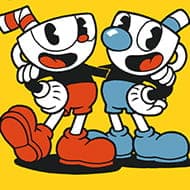








You install the files exactly the way the thread instructs, boot up an old Wii U you hadn’t touched in years, and Elder Kettle’s voice comes through the console’s speakers for the first time on hardware nobody ever expected to run it. That’s the actual story behind Cuphead on Wii U — not an official release, but a fan-built port that made an unsupported console play a game it was never meant to touch.
| Genre | Run and Gun / Boss Rush |
| Platform | Wii U (unofficial fan port) |
| Perspective | Side-scrolling |
| Players | 1–2 (Cuphead and Mugman) |
What This Version of Cuphead Actually Is
Cuphead was never officially released on Wii U. The original run-and-gun boss-rush game launched on Xbox One and PC in 2017, and when its developers expanded to a Nintendo platform two years later, they chose the Switch instead — Nintendo’s current hardware at the time, not its predecessor. The Wii U version that exists today comes from an independent group of fans who ported the game themselves, built around Cuphead’s final update before the official Switch release, with support added for the Wiimote, Nunchuk, Classic Controller, and Pro Controller.
It’s worth being direct about one thing before going further: this fan port is based on the base game, and it does not carry over the DLC content from Cuphead’s later official releases. Anyone hoping to fight through the added campaign on this specific port will be working with the original Inkwell Isle experience only, not the expanded one. Players hunting specifically for that added content are better off checking the current state of the port’s community threads before assuming it’s included.
This same group of fans has a track record on Wii U beyond just this game, having previously ported other indie titles the console never officially received. Cuphead is simply the most demanding project they’ve taken on, given how reliant the original is on smooth frame timing for its parry mechanic.
Fighting Through Inkwell Isle on Unsupported Hardware
The core loop of Cuphead hasn’t changed for this port — you’re still Cuphead or Mugman, still working off a soul-collecting debt to the Devil after a bad bet at his casino, and still parrying pink projectiles while dodging attack patterns that rarely repeat the same way twice. What’s different is the console underneath it. Getting a game built for modern hardware running smoothly on the Wii U’s gamepad and controller setup took real work from the porting team, and the results hold up well enough that Wiimote and Nunchuk inputs feel close to how the original controls behave elsewhere.
Beginners jumping into this game for the first time on Wii U tend to make the same mistake players have made on every platform: standing still to shoot instead of using the full width of the arena. Cuphead punishes stationary play hard, and bosses like Cagney Carnation or Grim Matchstick have attack phases specifically designed to close off whatever space you were standing in a second earlier.
Achievement hunters should know this port skips that entire system, along with multi-language support — two things the porting team was upfront about when releasing it.
Performance on Original Hardware
Running Cuphead on Wii U isn’t a one-to-one match with the original console versions. The port targets 720p rather than 1080p, since pushing higher resolution introduced noticeable performance dips during busier boss phases. For a game where a single missed dodge during a screen full of bullet patterns can end a run, that trade-off makes sense — a stable frame rate at lower resolution matters more here than visual sharpness.
Players testing the port on original Wii U hardware versus emulated setups report broadly similar experiences, though load times run longer than on the game’s official platforms, something the porting team has acknowledged while continuing to work on optimization.
How Difficulty Escalates Across the Isles
Inkwell Isle One eases new players in with bosses that have clear, learnable patterns. By the time you reach Inkwell Isle Two, attack phases start overlapping, and bosses like Baroness Von Bon Bon throw multiple simultaneous threats instead of single, readable ones. Inkwell Isle Three is where most runs stall out, since parry timing becomes less forgiving and King Dice’s gauntlet of mini-boss fights demands consistency across an entire uninterrupted run rather than a single fight.
Weapon choice matters more than new players expect. The Peashooter is the default and most forgiving option, but switching to something like the Spread or Chaser weapon against specific bosses can turn an unmanageable fight into a controlled one, and figuring out which loadout suits which boss is half the actual game.
Community vocabulary around Cuphead hasn’t changed just because it’s running on new hardware — players still talk about “parry chains,” still complain about specific bosses being run-enders, and still compare notes on which weapon loadout works best against which fight. That conversation carries over onto this port’s own threads exactly as it exists everywhere else the game is played.
Common Questions From the Wii U Community
Does the Wii U version of Cuphead include the DLC?
No. This fan-made port is built on the base game’s final pre-Switch update, and the DLC campaign released later on official platforms isn’t part of it.
Can you use a GamePad, Wiimote, or Pro Controller with this Cuphead port?
Yes, the porting team built in support for all of them, including the Wiimote and Nunchuk combination, so players aren’t locked into a single input method.
Do you need to already own Cuphead to install the Wii U port?
Yes, the port requires files from an existing copy of the original game placed in a specific folder structure on an SD card, rather than shipping as a standalone installer.
Whether or not the DLC ever gets ported over, what’s already playable on Wii U is a faithful run through the original game — Elder Kettle’s warnings, the debt to the Devil, and every boss on Inkwell Isle running on a console nobody expected Cuphead to ever reach.