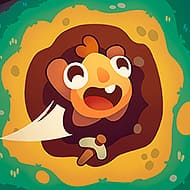








House of Puso doesn’t announce itself as a horror game right away. The first few minutes feel closer to a slice-of-life comic brought to life — soft linework, warm dialogue, two friends puttering around a house — and that’s exactly why the shift, when it comes, lands so hard. The art style is the game’s quietest weapon, and it deserves more credit than it usually gets in conversations about why the series works.
The Sketchbook Look Is Doing More Than Decoration
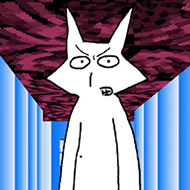
Every character in House of Puso is drawn with visible, slightly imperfect linework, the kind that looks like it came straight out of someone’s personal notebook rather than a polished production pipeline. That choice matters because it sets an expectation of intimacy — you’re not looking at a stylized horror mascot, you’re looking at something that feels handmade and personal, almost private. When the house starts to warp and the holes in the walls begin producing sound, that same hand-drawn softness stays intact, and the contrast between a gentle art style and increasingly disturbing content is where a lot of the game’s unease comes from. Nothing about the visuals escalates into anything grotesque; the horror is carried entirely by what the soft style is being asked to depict.
Color plays a similarly restrained role. Scenes with Bayani tend to lean into warmer tones, and the palette noticeably cools whenever Puso is alone in the house, particularly in rooms where a hole has recently reappeared. It’s not a dramatic shift, and the game never calls attention to it directly, but longtime players of the series have pointed out that you can often tell how “safe” a scene is meant to feel just from the temperature of its lighting before anything else happens.
Puso and Bayani as Visual Opposites
Part of what makes the friendship between Puso and Bayani so easy to read at a glance is how differently their bodies are built. Puso, as an arctic fox, is drawn with soft, rounded proportions and fur that reacts to his emotional state — it’s one of the few consistent visual cues the game gives players that something is wrong beneath the surface, since his fractured composure shows up as small, almost subliminal changes to his silhouette before anything is said aloud. Bayani, by contrast, is built like his kappa shell is armor as much as anatomy, and his ability to retract into it gives him a kind of visual solidity that Puso never quite has. Early on this reads as comic relief. Later, it starts to feel like Bayani is the only person in the house who has somewhere to hide.
Fans discussing the series — often under the shorthand “HOP” — frequently bring up how little the game relies on traditional horror imagery to unsettle players. There’s no monster design to speak of, no creature reveal. The holes themselves are drawn almost abstractly, more like tears in the linework than physical objects, which keeps them from ever fully resolving into something the player can categorize or dismiss.
Does House of Puso change its art style between episodes?
Not dramatically. Across its four episodes, the core visual language stays consistent, which is part of why small shifts — a slightly stiffer pose, a background left a little too empty — carry so much weight. The series relies on players having internalized what “normal” looks like in Puso’s house so that deviations register immediately.
Is the visual style connected to the original animated series?
Yes — the game’s look is drawn directly from Gigglegunks’ animated series, carrying over the same character designs and sketchbook aesthetic rather than reinterpreting them for a game format. Viewers of episodes like Winter with Puso and Bayani will recognize the house, the linework, and the emotional shorthand immediately.
As with the story itself, House of Puso’s art carries the same content warning around abuse and self-harm themes, and that context is worth keeping in mind, since some of the visual restraint described here is doing quiet, deliberate work around difficult subject matter rather than simply being a stylistic flourish.