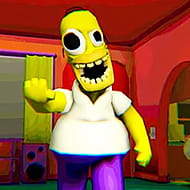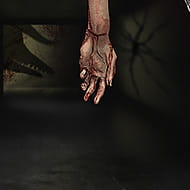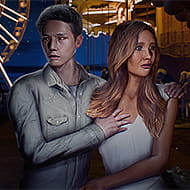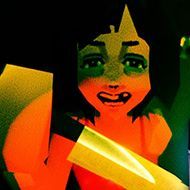








In Homicipher you start alone in a dark three-dimensional space with a weak handheld light and a vague sense that something is moving nearby, and that isolation matters from the first minute. It gives you no weapon, only the choice to keep moving, hide, or wait out a nearby sound. There is no map marker, just the beam of your light and whatever your ears pick up in the dark.
| Genre | 3D Horror Adventure |
| Perspective | First-Person |
| Core Focus | Exploration and Evasion |
| Best For | Fans of Short Tense Horror Runs |
Light, Sound, and Tension in Homicipher
The handheld light is the center of every decision Homicipher forces on you. Keep it on too long and the battery drains fast, leaving you stranded in full dark; switch it off too early and you risk missing a doorway right in front of you. New players tend to leave the light running constantly, which burns through it before reaching the later stretches of a run.
Footsteps and distant scraping sounds carry real information once you learn to read them. A sound that grows louder means something is closing in, while one that fades means you have a window to move. Players who rush past this early walk into trouble that patient players avoid by standing still and listening.
The moment most players remember is not a jump scare but a silence, the light flickering once in a narrow hallway with no sound at all, right before something crosses just outside the beam. That restraint sticks with people longer than a loud scripted scare would.
Movement and Risk in Homicipher
Difficulty in Homicipher climbs mainly through spatial pressure rather than added enemies. Corridors narrow, dead ends multiply, and the light’s battery becomes a resource you ration instead of a background detail. By the time you reach the deeper section of the map, backtracking is rarely an option, forcing a commitment on partial information.
Exploration-focused players who check every side room burn more battery than cautious players moving with purpose toward sound cues. Both work, but Homicipher punishes indecision more than either style alone, since standing still to think still drains the light.
- Does Homicipher rely on jump scares or is it more about tension? Mostly tension, since scares come from silence and sound placement rather than scripted jumps.
- How do you conserve the light’s battery in Homicipher? Switch it off during quiet stretches and rely on footsteps for direction, saving battery for corridors where you need to see a doorway or drop.
- Is there a way to fight back against whatever is in the dark? No. Homicipher gives you no weapon, so the only tools are moving, hiding, and reading whether a sound is closing in or fading.
How short a session runs splits players; some find the brevity frustrating after building tension, others say the game earns it by not overstaying the idea.
Homicipher stays memorable less for what it shows and more for what it withholds, and once you trust sound over light, the deeper corridors stop feeling like guesswork.