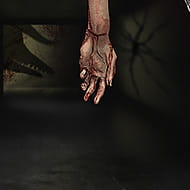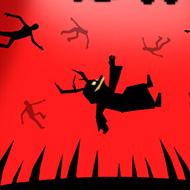








You duck behind a carnival stall in The Stalked 3, hold your breath, and realize the footsteps outside haven’t slowed down at all — they’ve adjusted, like whatever’s out there knows exactly where you went. That single moment tends to be the point where new players stop treating the game like a passive walking simulator and start actually paying attention to sound cues.
Olivia’s Night at Creepwood Wonderland Carnival
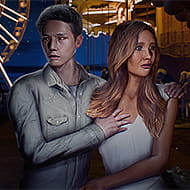
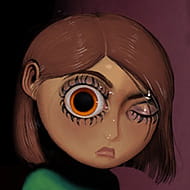
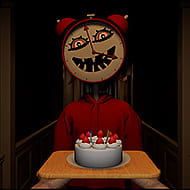
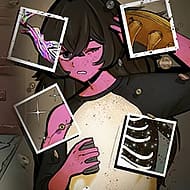
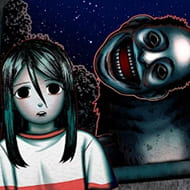
The Stalked 3 puts you in control of Olivia, who slips into the closed Creepwood Wonderland Carnival with her boyfriend Jack for what starts as a harmless late-night dare. It’s the third release under Korvinrular’s ongoing horror franchise, and returning players immediately recognize the studio’s habit of building tension through silence and suggestion rather than constant jump scares. That restraint is deliberate — Korvinrular’s earlier entries in the franchise built a reputation specifically for pacing tension slowly, and this installment leans even harder into that identity than its predecessors did.
Series veterans, who left comments after the demo praising how the game “got under my skin” through Jack specifically, tend to treat his dialogue far more suspiciously than first-time players do — a good instinct, since Korvinrular’s earlier entries have a track record of twist endings tied to characters who seem harmless at first. That suspicion changes how veteran players interact with him during optional conversation prompts, often testing his responses for inconsistencies rather than taking his reassurances at face value.
First-time players, by contrast, tend to trust Jack completely through the first act, which the game seems to anticipate and use deliberately. The gap between how newcomers and returning fans experience the same early scenes is one of the more interesting side effects of Korvinrular building a recognizable franchise identity — prior knowledge genuinely changes how the opening hour plays.
Three Locations, One Escalating Threat
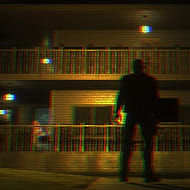
Beyond the carnival itself, the game moves through a creepy apartment and an unsettling convenience store before the story lands you at Creepwood Wonderland Carnival for its final stretch. Each location resets the tension in a different way; the apartment plays on domestic unease, the convenience store on public spaces feeling suddenly unsafe, and the carnival on being watched across wide open, poorly lit spaces. The transition between the three is handled without loading screens breaking immersion, which players in community threads consistently mention as a strength — the shift in atmosphere from cramped apartment to open, exposed midway feels like an actual escalation rather than three disconnected chapters stitched together.
Full playthroughs run close to an hour, while the earlier standalone demo, focused entirely on Olivia’s uneasy walk toward the carnival gates, clocks in around 20 minutes — useful if you want a sense of the pacing before committing to the full release. Players who tried the demo first generally describe the full game’s pacing as a direct extension of what the demo set up, rather than a tonal shift, which has helped manage expectations for newcomers coming from that shorter build.
By the time you reach the convenience store segment, roughly a third of the way through, the game has already established its core rule: nowhere is fully safe, and even brightly lit, mundane locations carry the same underlying tension as the carnival itself once the stalker becomes actively aware of Olivia’s presence.
- Notice environmental changes as you move between rooms — a door that wasn’t open before, an object shifted out of place — since these small inconsistencies are usually the game’s only warning before a chase sequence begins.
- Use NPC calls and texts to gather information rather than relying purely on exploration, because several plot-relevant details are only available through conversation and never appear in environmental clues.
- Treat hiding spots as temporary cover, not guaranteed safety, since the stalker adjusts to your patterns rather than following a fixed route, meaning a hiding spot that worked once may not work again on a repeat encounter.
What Divides Players
Not every reaction has been uniformly positive. Some players find the NPC conversation segments — calling and texting characters mid-story — slow the momentum right when the carnival sequences should be ramping up tension, and it’s a criticism that comes up often enough in comments to be worth flagging honestly. A handful of reviews specifically single out the convenience store segment as the pacing’s weakest stretch, arguing the conversation-heavy structure there breaks momentum right after the apartment’s stronger opening scares.
Others counter that those same conversations are what make the eventual twist land, since they plant details that only make sense in hindsight, and that trimming them would make the ending feel unearned rather than tighter. Community debate over this trade-off is ongoing, and it’s one of the more genuinely split opinions among players who otherwise agree the game succeeds at what it’s trying to do.
What almost everyone agrees on, including players who found the pacing uneven, is that the adaptive stalker system is the game’s strongest feature — one player specifically called out being unsettled by how the game “kept me on my toes,” a reaction to the unpredictability rather than any single scripted scare. Streamers and reaction-video creators have particularly gravitated toward this feature, since no two recorded playthroughs of the carnival chase sequences play out identically.
By the time the credits roll on The Stalked 3, most players are already asking whether a fourth installment is coming, and that anticipation says as much about how effectively Creepwood Wonderland Carnival gets under your skin as any individual chase through it.