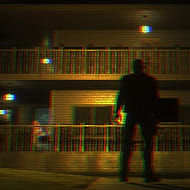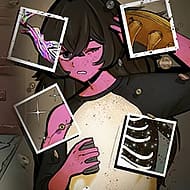








You knock twice on Bart’s door because that’s what he told you to do, and Homer answers instead, standing a beat too long before stepping aside to let you in. Homer Nightmares turns that first awkward pause into the entire game: a visit to a familiar house where the father figure is clearly not behaving the way he should, and nobody else seems willing to say so out loud.
| Genre | Multiplayer Horror Adventure |
| Core Objective | Escape the house by completing a fixed chain of tasks |
| Setting | The Simpsons’ house, focused around a boarded-up basement |
Bart’s Chores and Why They Buy You Time
Every run starts the same way: Bart hands you a short list of chores, and doing them is less about being helpful and more about keeping Homer occupied while you figure out what’s actually going on. Skipping a chore doesn’t fail the run outright, but it does mean Homer notices you faster, and in a game this reliant on timing, a faster Homer is a worse Homer. New players often treat the chores as flavor text rather than a stalling mechanic, which is the first mistake Homer Nightmares punishes.
The interact key does almost everything here. Pressing E lets you knock, grab items, and trigger short interactions, while R skips dialogue once a prompt appears, which matters more than it sounds like it should during repeat attempts. Players who’ve cleared the game more than once tend to burn through Bart’s early lines just to get back to the part that actually threatens them.
Marge and Lisa are both missing from the house at the start, and neither shows up again until much later, which is one of the smaller details that makes returning players uneasy on repeat runs even when they already know the ending.
The Basement Homer Would Rather You Never Open
The boarded-up basement is the game’s actual objective, and everything before it exists to get you the tools to reach it. You need the hammer to break the boards, and the hammer isn’t sitting in plain view; it has to be stolen at the right moment while Homer isn’t watching that part of the house.
Once the basement is open, the pacing shifts noticeably. The space is tighter, the lighting is worse, and Homer’s patrol timing becomes the single biggest threat in the entire game rather than a background inconvenience.
This is also where most first attempts end, not because the puzzle is unclear, but because players rush the door the moment it opens instead of confirming Homer’s position first.
Item Order Inside the Basement
The access card gets dug up in the backyard, the frozen cage key has to be melted using hot water rather than forced, and the axe sits in the safe room specifically for the confrontation that follows. None of these can be swapped or skipped, which is unusual for a horror game but consistent with how deliberately scripted Homer Nightmares is underneath its jump scares.
Homer Nightmares and the Cost of Guessing Instead of Following the Sequence
Because the run is a fixed sequence, almost every stall players hit traces back to one missing earlier item. If you’re stuck at the cage, you probably skipped the hot water. If Homer catches you constantly near the basement, you likely rushed past a chore you should have finished first.
This is the part of the game speedrunners and completionists tend to disagree with casually rather than the game punishing on its own. Speedrunners appreciate how memorizing Homer’s patrol timing turns a horror walkthrough into something closer to a rhythm challenge, while first-time horror fans often find the same rigidity frustrating on a blind run, since there’s no room to improvise your way out of a mistake.
Backtracking to the last confirmed tool is almost always the fix, and once you internalize that, later attempts move noticeably faster than the first.
The Safe Room Confrontation and What Comes After
Beating Homer with the axe in the safe room isn’t the end; it’s the point where the run tips into its final stretch. From there, placing all three dynamite sticks in the basement and getting upstairs before detonation is the last real test of Homer’s patrol timing under pressure.
Completionists hunting every jump scare tend to slow down here deliberately, since the basement’s final moments hide a couple of the game’s better scripted scares if you linger even slightly longer than the run requires.
The explosion itself isn’t subtle, and that’s intentional; it’s meant to feel like the release valve after a run built almost entirely around restraint and stalling.
What the Ending of Homer Nightmares Leaves Unanswered
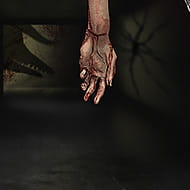
After escaping, a short epilogue plays in Bart’s room, followed by a brief shot of Homer’s hand. It’s not a full resolution, and it’s clearly not supposed to be.
Players discuss this ending more than almost anything else in the game, since it confirms the story isn’t finished without explaining what that actually means for a possible continuation.
Multiplayer runs change the tone of this ending slightly too, since going through the chores and the basement alongside another player makes the quiet epilogue land differently than clearing it alone.
Common Questions
How do you get into the basement in Homer Nightmares?
You need to steal the hammer while Homer is elsewhere in the house, then use it on the boarded-up basement entrance. The hammer only becomes available after progressing through Bart’s initial chores.
What do you do with the frozen cage key?
The cage key has to be melted using hot water rather than picked or broken. Trying to force it before melting it is one of the more common stalling points for new players.
What happens after you escape the house?
A short epilogue plays in Bart’s room between Bart and your character, followed by a final shot of Homer’s hand, signaling that the story continues beyond the run you just finished.
Homer Nightmares works because it never lets you forget that the house used to be safe, right down to small details like Bart’s room staying exactly where you’d expect it in a normal Simpsons house. The dynamite, the hammer, and the basement itself all exist because Homer Nightmares trusts a rigid sequence more than open exploration, and once you accept that, the game turns from confusing into genuinely tense.