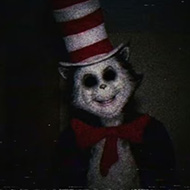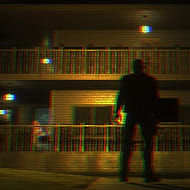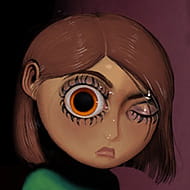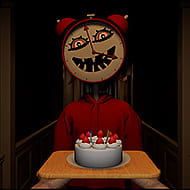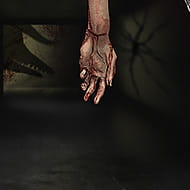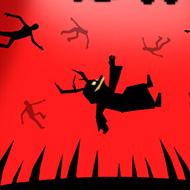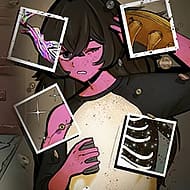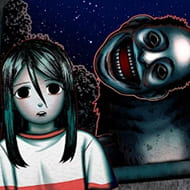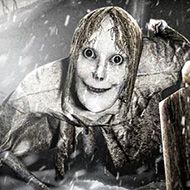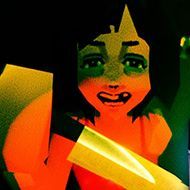








The premise sounds like a children’s book: a charismatic stranger shows up while the parents are away. The Cat in the Hat (Analog Horror) plays like something closer to a home-invasion thriller, built around the two nights Emily spends alone before anyone realizes something’s wrong.
Emily’s Two Nights Alone in The Cat in the Hat
The setup borrows its bones from the familiar story but strips away every reassuring beat. Emily’s parents leave for a short business trip, confident she’ll be fine on her own, and the game’s found-footage framing makes clear almost immediately that this trust was misplaced. The Cat arrives not as chaotic fun but as something far more calculated, and the tonal whiplash from the source material is the entire point. Players who came in expecting a straightforward jump-scare gallery tend to be caught off guard by how much of the opening plays like a slow character study before the horror mechanics even activate.
Players spend the early portion of the game exploring the house under normal circumstances, learning the layout before anything goes wrong. That quiet stretch matters later, since the maze sequence that follows reuses the same rooms in a way that only works if you already know where the exits are supposed to be. Casual horror fans looking for constant tension sometimes find this first night slow going, while players focused on environmental storytelling treat it as the most important twenty minutes in the whole game, since small details placed here — a moved photo frame, a door left ajar that wasn’t before — pay off directly once the second night begins.
By the time the second night starts, the house itself has changed just enough to feel wrong without anything being obviously out of place, and that’s deliberate. Community discussion frequently notes how effective this contrast is, and it’s also the most divisive part of the game — some players find the slow opening tedious, while others consider it essential setup that the horror wouldn’t land without. Lore-focused players in particular tend to defend the pacing, arguing that skipping ahead to the maze sequence without absorbing the first night’s details turns The Cat in the Hat into a much shallower experience than it’s designed to be.
Surviving the Maze Sequence
Once the maze triggers, controls shift, and sprinting becomes available specifically for this section using the run key. Players who explored thoroughly during the calm opening tend to navigate this portion far faster, since the maze reuses distorted versions of rooms visited earlier rather than generating anything new. The community term players use for a run through this section without ever hitting a dead end is a “clean run,” and reaching one on a first attempt is rare enough that most walkthroughs treat it as a genuine milestone rather than something expected from beginners.
Getting caught in the maze doesn’t always mean an instant restart, but it resets your positioning enough that experienced players describe losing a clean run as more costly than a straightforward jumpscare death would be. Once the Cat’s silhouette appears at the far end of a corridor, most players instinctively backtrack rather than push forward, and that instinct is usually correct early on, since the maze punishes blind sprinting far more than cautious repositioning.
Speedrun-focused players have mapped several of the maze’s dead ends closely enough to route around them, shaving real time off a full clear, though the layout still shifts just enough between playthroughs that memorized routes only get you partway there. That inconsistency is one of the more debated design choices in the game — some players enjoy that no two maze runs feel identical, while others find the shifting layout frustrating when they’re trying to improve on a specific route.
The Cat’s Presence Outside the Maze
- Early scenes rely on the Cat’s charisma and dialogue rather than direct threat, which lulls new players into treating him as harmless right up until the tone shifts without warning.
- Mid-game sections shift toward implied surveillance, with objects moved or missing between visits, a detail that rewards players who paused to memorize the house layout during the first night.
- The maze sequence is the first point the Cat becomes an active, pursuing threat, and reaching it without having noticed the earlier surveillance cues tends to make the escalation feel abrupt rather than earned.
This escalation is deliberate, and it mirrors how the original animated short handles pacing — charm first, dread building underneath, then a sharp turn once trust has already been broken. Players who track the Cat’s dialogue closely often notice that his early lines contain small contradictions that only make sense in hindsight, once his true intentions during the second night become clear.
What makes this progression land for most players is that nothing about the Cat’s behavior technically breaks character from how he’s introduced; he’s still charismatic, still performative, right up until the maze forces a direct confrontation. That consistency is part of why returning players often replay the early scenes specifically to catch dialogue they missed the first time through, now that they know what it’s building toward.
Fan Fiction Framing and What It Changes
The game carries an explicit disclaimer identifying itself as fan fiction, unaffiliated with the original property, and that framing shapes some of its choices — character designs lean distorted rather than directly recognizable, and dialogue avoids anything that would read as a direct adaptation rather than an inspired reinterpretation. This isn’t just a legal formality; it visibly affects how the Cat is animated and voiced, favoring an unsettling, slightly-off version of the familiar design over a faithful recreation.
That distance from the source material is also why the game leans so heavily on original elements like the maze sequence and the surveillance-style object shifts rather than recycling recognizable set pieces from the book or the 2003 film. Developers working within fan fiction constraints often have to build new mechanics specifically to sidestep direct copying, and the maze is a clear example of that approach paying off as its own distinct horror beat rather than a reskinned reference.
Some players who come in expecting heavy, direct nods to the original Dr. Seuss material end up disappointed by how far the game drifts from it, while others appreciate that the distance lets the horror stand on its own rather than leaning on nostalgia to do the work. Either way, the disclaimer at the start of the game sets expectations early enough that most players adjust quickly once the first night makes clear what kind of experience they’re actually getting.
How long is a full playthrough of The Cat in the Hat Analog Horror?
A single run through the house exploration and maze sequence takes most players under an hour, though backtracking to catch environmental details from the calmer opening extends that for anyone playing closely, and players chasing a clean run through the maze often spend considerably longer on repeat attempts alone.
Do you need to unlock the mouse cursor at any point?
Yes — certain menu and interaction moments require unlocking the cursor manually using the dedicated key, which trips up new players who expect the game to handle that automatically during quieter scenes between the Cat’s appearances.
Between Emily’s quiet first night and the maze sequence that finally breaks the tension, The Cat in the Hat (Analog Horror) earns its unsettling reputation by making sure you’ve already learned to trust the house before it stops being safe, and that trust is exactly what the Cat spends the whole game quietly working to break.