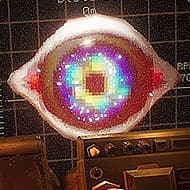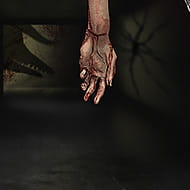








What happens when the drilling stops but the vessel keeps groaning around you? That’s the question Mole Horror keeps circling back to. You’re the Navigator aboard a colossal deep-bore vessel, sent down to keep a machine running that was never meant to dig this far, and the answer the game gives you isn’t mechanical failure — it’s something closer to the vessel developing a mind of its own the deeper it goes.
| Genre | Psychological horror with tactile simulation elements |
| Setting | The interior of a colossal deep-bore drilling vessel |
| Player Role | The Navigator, the last crew member still aboard |
| Core Mechanic | Operating and maintaining the vessel’s systems while its condition deteriorates |
Waking Up Alone Aboard Mole Horror’s Drilling Vessel
The premise is stripped down on purpose: the crew is gone, the vessel is still descending, and you’re the Navigator left to run controls that were designed for a full team. That imbalance is the entire tension of the early game. You’re not fighting anything in the traditional sense; you’re trying to keep a machine stable while it groans, shudders, and occasionally does something no drilling rig should be able to do on its own.
The tactile simulation layer is what separates Mole Horror from a straightforward walking-sim scare. Valves, levers, and panels respond the way real tools would, with weight and resistance, and that physicality is deliberate — the game wants you thinking about your hands on the machine, not just your eyes on the hallway ahead. Beginners often treat these interactions as a formality to click through, and that’s exactly where mistakes happen, because a rushed valve turn or a skipped maintenance step tends to have consequences a few minutes later, not immediately.
Community discussion around the game keeps coming back to two words: madness and faith. Both are baked into the fiction rather than explained outright, and the game is comfortable leaving players to decide how literally to take the vessel’s behavior. That ambiguity is one of the more divisive aspects players debate — some find it genuinely unsettling that nothing is ever fully confirmed, while others wish the game committed harder to one explanation.
How Difficulty Builds the Deeper Mole Horror Goes
Early sections are almost meditative. You’re learning the vessel’s systems, getting comfortable with its rhythm, and the horror is mostly atmospheric — sound design, distant groaning metal, the sense that the ship is bigger than any one deck you’re standing on. That calm doesn’t last. Once you’re deep enough that surface contact is gone entirely, the game starts layering malfunctions on top of routine maintenance, and it stops being clear which faults are mechanical and which ones are something else.
This is the point where most first-time players get overwhelmed, not because the controls get harder to physically operate, but because the game asks you to keep performing routine tasks while your environment is actively trying to convince you not to trust it. Sound cues become more important than visual ones for a long stretch, and players who slow down and listen tend to catch warning signs that players rushing through checklists miss entirely.
By the time you reach the vessel’s lower structural levels, the tactile controls you learned early on get reused in contexts they clearly weren’t designed for, which is one of the more effective late-game turns — familiar mechanics stop feeling safe.
The Vessel’s Systems and What They’re Really Asking of You
Mechanically minded players tend to gravitate toward Mole Horror because so much of it rewards understanding a system rather than reacting to a threat. Cautious players who methodically check every gauge before moving on generally have an easier time reading which malfunctions are dangerous and which are just noise. Meanwhile, players who prefer pure atmosphere over mechanical precision still get plenty out of it, since the game never gates its scares behind perfect performance — a fumbled task is more likely to cost you unease than to end the run outright.
One moment that only really lands from actually playing it: the first time a valve you’ve turned a dozen times without incident suddenly resists in a way it never has before, and there’s no prompt telling you why. It’s a small mechanical hiccup on paper, and it’s genuinely unnerving in practice.
- Learn the standard maintenance loop early, since the game builds its scares on top of routines you already trust
- Pay attention to sound over sight once you’re past the vessel’s upper decks
- Treat unexplained resistance in the controls as information, not a bug
Community Vocabulary Around Mole Horror
Discussion of the game tends to use “the descent” as shorthand for the game’s back half, once contact with the surface is gone and the vessel’s behavior stops making mechanical sense. Players also frequently reference “the Navigator’s hands,” a phrase pulled from the game’s own framing, when talking about how tactile the interactions feel compared to typical horror titles.
Mole Horror isn’t interested in a monster chasing you down a corridor; it’s interested in what happens when the machine you trust starts behaving like it has opinions about how far down it wants to go. By the time the Navigator’s hands are turning valves that shouldn’t still be working, the game has already made its point, and that’s what keeps players talking about the descent long after the credits roll.