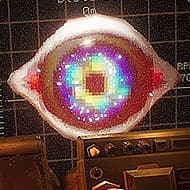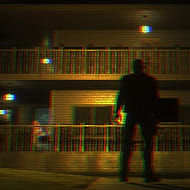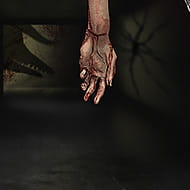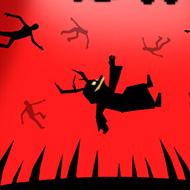








The drilling vessel at the center of Mole doesn’t have a name chosen for comfort. Viktor Kaminskyi’s crew simply calls the M-13 machine by the same word, and by the time you’re squeezing through its narrowest maintenance shaft, repeatedly pressing forward just to keep crawling, that name stops feeling like a throwaway detail and starts feeling like a warning. This is a game built almost entirely around operating machinery under pressure, and that machinery is the real main character.
| Genre | First-person psychological horror |
| Setting | The deep-bore vessel Mole, beneath the Socialist People’s Republic of Nevriska |
| Core Mechanic | Gesture-based machine operation under escalating pressure |
| Perspective | First-person, mouse and keyboard only |
Viktor Kaminskyi and the White Rabbit Signal
You play Viktor Kaminskyi, the Navigator aboard the vessel, sent to trace a mysterious transmission the game calls the White Rabbit Signal. Those exposed to it report hearing voices urging them to dig downward, and the vessel’s original crew has already vanished by the time you wake up in its eerily quiet corridors. Mole never explains everything up front, choosing instead to let the vessel’s failing systems and scattered logs fill in Viktor’s backstory piece by piece as you work.
What makes this framing land is how directly it ties into the gameplay itself. Every valve you turn and every fuse you swap is Viktor keeping the machine alive long enough to reach whatever is calling from below, so narrative and mechanical interaction are never separated the way they are in most horror games.
Operating the Machine in Mole Instead of Watching a Cutscene
Mole is built around gesture-based interactions rather than simple button prompts. Rotating your mouse to unscrew a vent panel, flipping physical-feeling levers, and manipulating a joystick on a console all require deliberate, sustained input, and the game leans hard into that clunkiness as a feature rather than a flaw. It genuinely makes you feel like you’re wrestling with a colossal machine rather than clicking through an interaction menu.
New players consistently underestimate how much this tactile approach demands. Treating these systems like a normal walking simulator’s point-and-click puzzles is the most common early mistake, since Mole expects continuous, careful input rather than a single click to resolve most tasks.
Escalating Pressure in Later Sections
Early in the game, tasks like opening vents or swapping fuses happen at a manageable pace, letting you learn each gesture without much urgency. By the time failing systems start stacking on top of each other, the same interactions have to be performed under real time pressure, and that shift is where Mole earns its reputation as more than just a curiosity piece. Community discussion around the game frequently centers on this pacing, since the difficulty ramp from calm tinkering to frantic multitasking feels sudden to some players and perfectly paced to others.
Chase sequences against the creature lurking in the Mole’s corridors punctuate these pressure spikes, and they’re the most divisive part of the experience. Brightness dependency: several players have found the default brightness setting makes navigating these chases nearly impossible to see clearly, and bumping the in-game brightness slider up substantially is a common fix discussed on forums rather than an official difficulty option.
Story-focused players tend to slow down and read every scattered log they find aboard the Mole, piecing together what happened to the original crew before pushing further down. Players chasing pure tension, on the other hand, often skim past those details on a first run and only go back for them once they already know how the story ends, treating a second playthrough almost like a scavenger hunt through Viktor’s guilt rather than a fresh scare.
Community Vocabulary Around Mole
Discussion threads about Mole tend to develop their own shorthand quickly. Players refer to the gesture-based interactions collectively as “the fiddly stuff,” a term that started as a complaint and turned into an oddly affectionate nickname once people got used to the input style. The brightness workaround for chase sequences shows up so often in these threads that regulars simply call it “cranking the dial” rather than explaining the fix from scratch every time.
What Players Say About the Chase Sequences in Mole
Opinions split hardest around these chase segments specifically. Some players find the disorientation intentional and effective, arguing it mirrors Viktor’s own panic as the vessel deteriorates around him. Others find it a rare misstep in an otherwise carefully tuned game, since fumbling through the dark toward safety can feel like fighting the visibility setting rather than fighting the horror itself. It’s one of the few aspects of Mole that draws consistent, pointed criticism even from players who otherwise praise the game highly.
Despite that friction, most discussion around the game circles back to how well its industrial setting and mechanical interactions serve the story rather than distracting from it. The game keeps the true nature of the White Rabbit Signal deliberately ambiguous through most of its runtime, leaning on fragmented logs and the vessel’s own deteriorating systems to hint at something waiting beneath the Nevriska soil rather than stating it outright. That restraint is part of why players tend to finish Mole in a single focused sitting rather than spreading it across several nights, since stopping partway through feels like leaving Viktor’s descent unresolved.
The mouse-and-keyboard-only control scheme isn’t an oversight either. Precise gesture input is so central to operating the vessel’s systems that a controller simply couldn’t replicate the deliberate, sustained movements the game asks of you, and most players who’ve tried alternate setups agree the tactile mouse input is what sells the illusion of physically handling the machinery. Fixing a console under a ticking countdown feels meaningfully different once you know what Viktor is running from, and by the time you reach the vessel’s lower levels, every gesture carries narrative weight it didn’t have in the opening hour.
Mole succeeds because it never lets the mechanical busywork feel like busywork. Viktor Kaminskyi’s slow unraveling and the vessel’s own failing hull are the same story told through two different systems, and that overlap is exactly what keeps players white-knuckling their way through its tightest maintenance shafts.