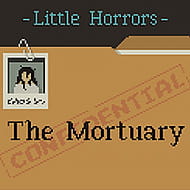








Feed The Pit looks like a cozy card game about tracking people down, but it plays like a horror game that never lets you stop moving, and that gap between the two first impressions is exactly what the game is built around.
Carrister Valley and the Cards That Narrow It Down
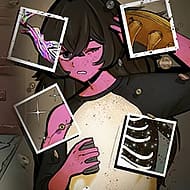
You’ve been pulled into the Chosen Circle, a secretive group serving something called the Pit, and your job across each mission is to hunt down a specific target hidden somewhere in Carrister Valley. The tool for that is a limited hand of magical cards, each one asking a different question about the target’s location — a landmark nearby, a condition of the terrain, a detail about the hiding spot. Play the right sequence and the valley narrows down to a single possible location; waste a card too early and you’re stuck guessing later with far less information than you needed.
No two investigations play out the same way, since the cards you’re dealt and the questions available to you shift from mission to mission. That randomness is part of the appeal for players who enjoy the deduction side of the game, and part of the frustration for players who’d rather explore freely than work within a restricted hand.
Community discussion around Feed The Pit leans heavily on card terminology — players talk about “wasting a question,” “narrowing the map,” and chasing the cEDH achievement, which requires solving a target’s location using two or fewer cards outside of the very first mission.
Every Mission Brings a New Nemesis
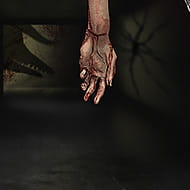
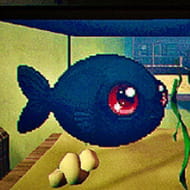
Alongside the card puzzle, each mission introduces a monster acting as that day’s specific threat, and its behavior is never explained upfront. Early on you’ll run into hostiles like a roaming Cardmaster that patrols the map, and other missions introduce far stranger pursuers, including one particularly unsettling encounter players describe as a distorted, child-like figure that only turns hostile if you look directly at it.
Beginners get this part wrong constantly: the instinct is to fight or hide statically, but survival in Feed The Pit is almost entirely about evasion and environmental knowledge. Certain terrain, like the valley’s river, can break pursuit from specific threats, while standing still or staring too long at the wrong thing tends to provoke exactly the reaction you were trying to avoid.
By the time you reach a mission with the spider as your nemesis, the difference in personality between monsters becomes obvious — some reviewers have noted the spider carries more distinct behavior than a few of the other threats, which is one of the more honest criticisms circulating about the current act.
Act 1, Challenge Mode, and What’s Still Missing
The current release covers Act 1 only, running roughly two to three hours for a single playthrough, with Acts 2 and 3 planned as free updates rather than paid expansions. That episodic pacing is one of the more debated aspects of the game — some players are fully on board with an early-access-style rollout for a story this tightly written, others are wary of judging or investing in a horror campaign that isn’t finished yet.
Once Act 1 is cleared, Challenge Mode opens up as the game’s answer to replayability, offering eight difficulty presets and sixty-three additional questions to unlock across the various cultists in its hideout. Early versions of Challenge Mode drew complaints about specific combinations, most notably a roaming Cardmaster paired with exploding cards, creating runs that were effectively unsurvivable regardless of skill — a balance issue the game’s harder presets, including one nicknamed SUFFER by the community, have since been adjusted around.
Once the Chosen Circle’s belltower of a story fully opens up, the tension shifts from “can I solve this map” to “do I actually want to know what the Father is planning,” and that narrative pull is what keeps most Act 1 completions from feeling like a dead end.
How Do You Actually Find a Target in Feed The Pit?
You play cards from your limited hand to ask questions about the target’s whereabouts in Carrister Valley, using each answer to rule out sections of the map until only one location remains, then move in while managing whatever monster is assigned to that mission.
Is Feed The Pit Finished, or Just Act 1?
Only Act 1 is currently available; Acts 2 and 3 are confirmed as planned free updates rather than a separate purchase, so the current campaign runs a self-contained few hours rather than the full intended story.
What’s the Point of Challenge Mode?
Challenge Mode reuses the card-and-monster loop from Act 1 across eight harder presets, unlocking new interrogation questions as you clear each one, and exists specifically to give players something to do between story updates rather than padding the main campaign.
What makes Feed The Pit stick with people isn’t just the tension of running from whatever monster a mission hands you — it’s the slow realization of what the Pit actually is, and how far the Chosen Circle expects you to go before you get to decide whether you’re a believer or just someone who got dealt a bad hand.