







In Witchspire you start as a novice witch or wizard with a wand, a handful of basic spells, and no idea how to get home, which matters because the entire early game is built around that helplessness before the tech trees and coven-building give you any real power. That early vulnerability isn’t just flavor text — it shapes how cautiously most players approach their first ruin, since a poorly chosen fight in the opening hours can end badly against creatures that outclass a starting loadout.
| Developer | Envar Games |
| Genre | Co-op survival crafting adventure |
| Players | Single-player or co-op, up to four witches |
| Status | Early Access on Steam |
Wands Instead of Weapons
The core hook of Witchspire is replacing conventional survival-game gear with magic. Instead of scavenging guns, you find wands, swords, and spells, each carrying its own properties, with two spells bound to your left and right mouse buttons at any given time. Combat leans on a quick dodge and generous double-jumping, which gives fights a more mobile, fluid feel than the genre’s usual gear-grind combat. That mobility becomes especially noticeable once a player unlocks their first movement-focused spell, since the double-jump alone already opens up verticality that most survival-crafting titles simply don’t offer.
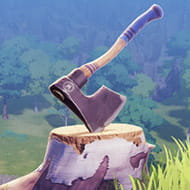
Even mundane survival tasks get the magic treatment — chopping wood, for instance, becomes flicking a wand to launch a burst of wind blades instead of swinging an axe. It’s a small change, but it’s the kind of detail players point to when explaining why Witchspire doesn’t feel like a reskinned survival template despite following a familiar structure. The same logic extends to mining and harvesting, where different wand types produce noticeably different visual and audio feedback, giving even repetitive resource-gathering tasks a bit more personality than the genre typically bothers with.
Players who gravitate toward pure combat builds tend to specialize early into offensive wand loadouts, chasing the double-jump and dodge combos that let them bypass slower enemies entirely rather than trading hits. That playstyle contrasts sharply with players who lean into utility spells for resource gathering, since Witchspire’s tech trees genuinely support both approaches without forcing a single “correct” build.
Coven Building and the Open World
Beyond combat, Witchspire centers on building a sanctuary alongside other witches, whether that’s friends in co-op or your own solo base. The open world is designed for broom flight between locations, with ancient ruins scattered across the map as the main sites of exploration and combat. Broom traversal in particular has become a talking point in early previews, since it changes how players scout ruins compared to walking — spotting a ruin from the air and deciding whether it’s worth landing near becomes its own small strategic decision once a few dangerous ruins have taught players caution.
- Explore ruins scattered through the open world on broomback, since aerial scouting lets you gauge a location’s difficulty before committing to a ground fight.
- Befriend and battle magical creatures encountered along the way, with taming certain creatures opening up companion options that support both combat and sanctuary life.
- Build and expand a shared sanctuary with up to three other players, turning base design into a genuinely collaborative project rather than a solo checklist.
- Grow your character through expansive, spec-driven tech trees, which let separate players in the same session specialize into different roles rather than converging on one ideal build.
Players drawn to the building side of the game tend to sink hours into sanctuary customization early, while combat-focused players push straight toward the ruins and the tech tree unlocks that make fights more manageable. Both approaches are supported, since Envar Games built the tech trees to encourage specialization rather than one universal build, and co-op groups often end up naturally dividing these roles among themselves once the first sanctuary is established.
An Ancient Darkness Rising
The narrative framing is straightforward: an ancient darkness is rising across the land, and your witches or wizards are trying to find their way home while dealing with it. It’s not a particularly dense story by design — Witchspire leans harder on the gameplay loop of exploration, combat, and base-building than on narrative complexity, which is a trade-off some early Steam reviews have already started to debate as more players get hands-on time.
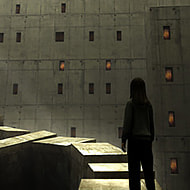
That said, the setting itself does a fair amount of storytelling without relying on dense text. Ruins scattered through the open world carry visual cues about what happened there before the darkness spread, and players exploring purely for loot often end up piecing together fragments of the wider setting almost by accident, simply by paying attention to what a given ruin looks like once you’re standing inside it.
Community discussion around Witchspire so far tends to focus less on plot specifics and more on build theorycrafting — comparing wand and spell combinations, debating which tech tree branches pay off fastest, and sharing sanctuary layouts, which fits a game whose identity is clearly built around systems rather than a scripted narrative arc.
Early Access Expectations
Envar Games has stated it expects to remain in Early Access for at least a year, which is worth knowing before jumping in, since the game is explicitly framed as unfinished and evolving based on community feedback. That’s standard for the genre, but it does mean the tech trees, ruin variety, and sanctuary systems described in early previews may shift meaningfully before a full 1.0 release.
Players going in during Early Access should expect the usual trade-offs: less content density than a finished release, occasional balance passes that shift which wand or spell combinations feel strongest, and a real chance that features shown in early trailers get adjusted based on what the community reports back. Envar Games has been explicit that this feedback loop is part of the plan rather than a side effect, framing early access less as a discount preview and more as a collaborative build process with the player base.
Is Witchspire finished or still in development?
It’s in Early Access, with the developer stating an expected minimum of a year in that phase while the game evolves alongside community feedback, meaning content and balance are both still actively changing.
How many players can join a Witchspire session?
Up to four total — you and up to three friends — sharing the same sanctuary and open world, with tech trees flexible enough that each player can specialize into a distinct combat or utility role.
Does Witchspire have real combat or is it mostly crafting?
Both are core pillars: wand and spell-based combat with dodging and double-jumping sits alongside base-building, creature-taming, and ruin exploration as equally central systems, and the game doesn’t push players toward one at the expense of the other.
Witchspire’s early build already makes its identity clear — wands instead of guns, brooms instead of vehicles, and a sanctuary worth defending — and how well that identity holds up will depend on what Envar Games adds to the ruins and tech trees over its Early Access year.