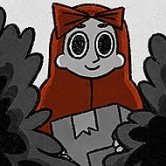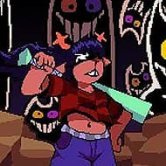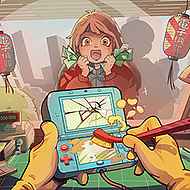








Tom the Postgirl looks like a storybook postal round but plays like a dare. The ink-black village, the neat little parcels and the cheerful job title suggest a gentle stroll, yet every lane tempts Tom to stop, peer through a window and decide how nosy she is willing to be.
Walk-and-Stalk Versus Point-and-Click: What Tom the Postgirl Swaps Out
Classic point-and-click adventures hand you an inventory and a locked door. Here the inventory is gone, and the locked door is replaced by a social boundary: a house you have no business watching. Players have taken to calling the loop walk-and-stalk, and the label fits.
Instead of combining objects, you move Tom through space and choose what to do with her curiosity. Hidden observation points stand in for the puzzle, and finding one is its own reward.
Anyone arriving from visual novels will notice a familiar, story-first rhythm, though the walking keeps things more active than a text-heavy read.
A Name That Winks: Peeping Tom and the Postgirl
Tom’s name is a pun on the old phrase peeping Tom, meaning a voyeur, and the game never pretends otherwise. The joke is built into the job, since someone who visits every house on the round has perfect cover for watching them all.
That reading shapes how scenes play. Delivering feels like a duty, peeking feels like Tom’s real nature, and the space between the two is where the comedy lives.
Players who love character-driven stories get the most from this, because Tom’s habits explain more about her than any speech could.
Black Ink, Frame-by-Frame Motion and a Quiet Soundtrack
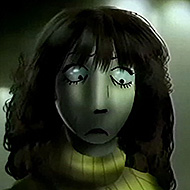
The art is hand drawn and animated frame by frame, in black and white with a comic-strip finish. The slightly jittery motion gives ordinary scenes a faint wrongness, which makes the genuinely disturbing ones hit harder.
The original soundtrack stays out of the way, supporting the creepy-cute mood without announcing itself. Moments of quiet carry as much weight as the music does.
Style is a matter of taste, and the stark monochrome look will not suit every player.
Dark Comedy and a Short Runtime
The tone is darkly comic, with crude jokes, bizarre residents and a handful of unsettling scenes. Nothing demands skill, so difficulty is close to absent and the draw is curiosity.
Because the game is short, a second lap is realistic, and many players use it to try the vandal options they skipped: trampling flowers, cutting hedges and stealing decorations.
Completionists get the most from that lap, while anyone hoping for deep systems to optimize will find little to chew on.
Questions About Tom the Postgirl Players Search For
- Is it a point-and-click adventure? Not in the traditional sense. Tom walks, runs and interacts directly, and the puzzle solving of that genre is replaced by watching residents from observation points and choosing whether to deliver or open each parcel.
- Why is the postgirl named Tom? The name nods to peeping Tom, a term for a voyeur, which suits a postgirl who peeks into homes on her round. The wordplay sets the tone before a single parcel changes hands.
- Is Tom the Postgirl a visual novel? Some listings tag it with that genre because story and character lead, but the walking and the optional mischief with flowers and hedges make it feel more like a small adventure you move through yourself.
Tom the Postgirl lingers because its smallest choices say the most: whether Tom leaves the flowers alone, whether a parcel reaches its door unopened, whether a resident is ever truly out of sight. Pick one hedge to cut or one window to watch, and the whole route reads differently afterwards.