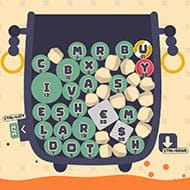








The bomb in Scratch the Ticket hides behind just one of five cells on every ticket, and that single one-in-five sits behind pretty much every decision the game asks you to make.
| Genre | Incremental / Simulation |
| Perspective | First-person |
| Core Loop | Print, scratch, cash out or risk it |
| Platform | PC |
| Cells Per Ticket | 5 (4 multipliers, 1 bomb) |
The Core Loop Behind Scratch the Ticket
You print a ticket, reveal its five cells one at a time, and after every single reveal you decide whether to bank your current winnings or keep going. Four of the five cells hide multipliers that raise your payout when uncovered. One hides a bomb that erases everything accumulated on that ticket the instant it’s revealed. That’s the entire tension Scratch the Ticket runs on, repeated ticket after ticket, session after session.
Winnings feed a shop where you buy and upgrade printers, unlocking better base odds, faster printing, and new information tools that chip away at the guesswork. The whole loop builds toward one deliberately oversized goal — saving enough to afford a downtown apartment — which gives what could easily be an endless number-climb an actual finish line to work toward.
It’s a short session game at heart. You can sit down for five minutes and print a couple of tickets, or you can lose an hour chasing one high-multiplier print you’re convinced is worth the risk.
Progress early on is almost entirely about learning your own risk tolerance, since the game gives you very little concrete information to work with on a fresh, unupgraded printer.
Tools That Change How You Read a Ticket
Early on you’re scratching mostly blind, but Scratch the Ticket gradually hands you tools that shift the odds meaningfully in your favor as you reinvest winnings. The Spy quietly marks where the bomb is hiding without revealing anything else about the ticket’s multipliers. The UV Flashlight and the LED X-ray Panel each reveal partial information about a ticket’s layout before you commit to opening a cell, letting you make a more informed call on whether to push further.
The Drops tool is the most powerful of the bunch, giving a full X-ray of the entire ticket at once — every multiplier and the bomb, all visible before you scratch a single cell. Because it’s the most expensive tool to use, most experienced players save it specifically for tickets carrying an unusually high multiplier stake rather than burning it on routine prints.
- Spy — secretly marks the bomb cell
- UV Flashlight — reveals partial cell information
- LED X-ray Panel — reveals more detail at a printer upgrade cost
- Drops — full ticket X-ray, typically saved for high-value tickets
Balancing which tool to bring on which ticket becomes its own layer of decision-making once you own more than one, since using every tool on every ticket usually isn’t sustainable early on.
Where New Players Lose Their Winnings
The most common mistake in Scratch the Ticket is treating every ticket the same way instead of adjusting risk tolerance based on the multiplier stakes actually shown. A ticket with modest multipliers doesn’t call for the same caution as one where a single wrong cell wipes out a genuinely large accumulated total.
Newer players also tend to burn through their information tools too early in a session, using a Drop on a low-value ticket out of habit instead of saving it for a moment where the payoff actually justifies the cost. By the time you’ve upgraded past your first printer, that kind of resource discipline becomes the real skill the game is quietly testing underneath the simple reveal-and-decide surface.
A smaller but common trap is chasing a loss immediately after hitting a bomb, pushing a follow-up ticket harder than usual to “make it back.” The game doesn’t punish this directly, but players who fall into that pattern tend to describe it as the fastest way to burn through a printer’s earnings in a single sitting.
Printer Upgrades and the Later Grind
Once you own multiple printers, Scratch the Ticket shifts from an active decision-making game into something closer to a management loop — running several ticket batches at once and checking in periodically rather than scratching every cell by hand. Upgrade paths in the shop include options with community nicknames like the Minesweeper-style risk-reduction line and the Battleship-tier printer upgrades, both of which push toward automating more of the guesswork the early game makes you handle manually.
Community reaction to this later shift is genuinely mixed. Some players enjoy the pivot toward an idle rhythm once the core risk-reward loop has been thoroughly explored by hand, treating the late game as a reward for mastering the early tension. Others feel the tension that made the opening hours interesting fades once printers start doing most of the work automatically, and a few reviews specifically call out that the game becomes noticeably repetitive once scratching stops being the primary activity.
That divide is worth knowing about going in — Scratch the Ticket is really two different games stitched together, an early hand-scratched risk game and a later printer-management idle game, and not everyone enjoys both halves equally.
How does the bomb mechanic work in Scratch the Ticket?
Each ticket has five cells — four hide multipliers and one hides a bomb. Revealing the bomb cell wipes out everything accumulated on that specific ticket, so every decision to keep scratching is a direct trade-off against that one-in-five risk.
Are the information tools worth buying?
Tools like the Spy and Drops meaningfully shift the odds in your favor, especially on high-multiplier tickets, but they cost printer upgrade currency to use, so most experienced players save the strongest tools for tickets where the risk actually justifies spending them.
What’s the end goal in Scratch the Ticket?
The game frames your accumulated winnings toward one large, deliberately expensive purchase — a downtown apartment — giving the incremental progression a defined target instead of an open-ended number to climb forever.
Scratch the Ticket keeps its concept narrow on purpose, and that’s the point — five cells, one bomb, and tools like Drops and the Spy are all it needs to turn a simple reveal-and-decide loop into something that stays tense long after the first ticket comes off the printer.