







Particle Clicker looks like just another Cookie Clicker skin at first glance, but it plays like a genuine, if simplified, history of high-energy physics discoveries hiding behind the clicking.
Born at a CERN Hackathon
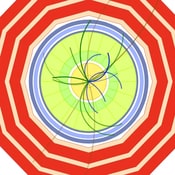
The game came out of CERN’s Webfest 2014, a 48-hour hackathon where a team — Gabor Biro, Igor Babuschkin, Kevin Dungs, Tadej Novak, and Jiannan Zhang — built Particle Clicker as their winning entry, modeling it directly on Cookie Clicker’s structure while swapping cookies for particle physics data. Clicking a stylized particle detector on screen triggers simulated collisions, and each click adds to a running total of data that fuels the rest of the game’s progression.
From there, Particle Clicker follows a rough chronological path through real discoveries in the field, with each unlocked breakthrough accompanied by an info tab explaining the actual science behind it rather than a generic flavor-text description. That structure is what separates it from most incremental games built purely around escalating numbers — the escalating numbers here are attached to something historically real.
Staff, Funding, and Reputation in Particle Clicker
As data accumulates, players unlock the ability to hire staff who work the accelerator on their behalf — PhD students, postdocs, research fellows, tenured professors, and even summer students, the last of whom the game itself flags as the most productive tier available. Funding and reputation grow alongside data, and both get funneled into technical upgrades that boost efficiency and accelerator luminosity, plus a handful of tongue-in-cheek staff perks like free beer for PhD students or extra coffee for postdocs that nudge productivity further.
- Built during CERN’s 2014 Webfest hackathon
- Released as a full HTML5 version through CrazyGames in February 2020
- Open-sourced on GitHub under the MIT License
The official CERN-hosted version specifically recommends landscape orientation on mobile devices, since the event display used to visualize collisions can be demanding depending on the hardware running it.
Frequently Asked Questions
Is Particle Clicker based on real particle physics history? Yes, its research and discovery track follows a rough chronological order of actual milestones in the field, each paired with an explanatory info tab.
Who is the most productive staff type to hire in Particle Clicker? Summer students, somewhat counterintuitively, are described by the game itself as the most productive tier of hireable staff.
Where can Particle Clicker be played? It’s available through CERN’s own hosted version and through CrazyGames, with the underlying code open-sourced on GitHub for anyone curious about how it was built.
What began as a 48-hour hackathon project has held up well past its original event — Particle Clicker still functions as a surprisingly effective way to absorb real physics history disguised as one more incremental clicking game.