







What happens when the teacher can hear your whispers, see your paper balls, and still expects a perfectly completed exam? In Finals Week, you and up to three friends try to graduate by coordinating increasingly ridiculous cheating plans instead of studying.
| Format | First-person co-op stealth and party simulation |
| Players | 1–4 |
| Exam sequence | 12 exams |
| Core objective | Pass together while avoiding the Professor |
Finals Week Turns the Classroom into a Team Puzzle
The basic loop is simple to explain but messy to execute. Find answers from classmates who studied, locate textbooks, then relay what you learn through cellphones, walkie-talkies, binoculars, or handwritten notes.
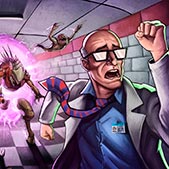
The Professor is the moving pressure behind every decision. He patrols the room, reacts to suspicious noise, and throws erasers with unnerving accuracy.
Between tests, the hall gives the squad room to reset. Basketball, baseball, statue decorating, and outfit unlocks provide a breather from the exam loop, while the next test encourages a fresh plan.
Smarter Routes Through Finals Week
Beginners often treat every useful object as something to grab immediately. That creates unnecessary movement and makes the team noisy.
Use the room itself as part of the plan. Paper balls and throwable objects can create openings, while classroom equipment and secret passages offer alternatives to crossing the Professor’s line of sight.
One recognizable moment is the sudden hush after a teammate speaks too loudly: everyone knows the Professor has heard something, but nobody knows which desk he will check first. That proximity-chat tension is the game’s signature party-game rhythm.
Communication Makes or Breaks a Finals Week Run
A useful team callout describes both the information and the risk: say which answer you found, where you are standing, and whether the Professor is approaching. That is more helpful than shouting a number without context, especially when several players are moving at once. If voice chat becomes too noisy, pause the plan and give one player responsibility for passing the next answer while the others hold position.
There is also a difference between creating a distraction and creating a second problem. A paper ball can pull attention away from a teammate, but throwing objects without a clear purpose may expose the thrower instead. Squads that enjoy planning will get more consistent results from short, deliberate plays; groups that prefer improvisation can still have fun, but should expect more accidental detections and last-second escapes.
Questions Players Ask About Finals Week
- How many exams are in Finals Week? The published launch description identifies 12 different exams. Each exam raises the pressure, so squads should expect to adjust their answer-sharing route rather than repeat one fixed classroom routine.
- What tools help you share answers? Cellphones, walkie-talkies, binoculars, textbooks, and paper notes all support the cheating loop. Choose the tool around distance and risk: a quick message may be safer than crossing the room, while binoculars can help check information before moving.
- How do you avoid the Professor? Watch his patrol, keep conversations quiet, and use distractions or alternate routes instead of repeatedly crossing his path. The Cone of Shame and other restraints make getting caught more than a brief interruption, so prevention is usually better than a last-second rescue.
Finals Week works best when the squad treats each exam as a shared stealth problem, not a race to collect every tool. Keep the Professor in view, pass answers with a clear plan, and save the loudest distractions for the moment they can actually protect a teammate.