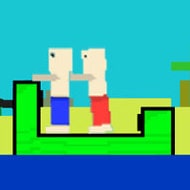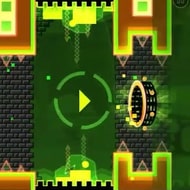








What happens the instant you misjudge a jump in Fall Again and the platform you were counting on simply is not there anymore? That question is the whole appeal of this physics-based obstacle game. It drops you onto a track of moving platforms, swinging arms, and pressure switches, then asks you to reach the far end without a wasted step. There is no health bar to cushion a bad read of the terrain, so every attempt becomes a small negotiation between confidence and caution.
| Genre | Physics obstacle course |
| Play Mode | Single run, retry-based |
| Objective | Cross the course without falling |
| Core Challenge | Reading hazard timing under momentum |
Momentum and the First Real Drop in Fall Again
The opening stretch of Fall Again looks forgiving, and that is the trap. Flat platforms lull new players into running full speed, which works until the course introduces a gap that needs a held jump instead of a tapped one. Players who treat every gap the same way undershoot once the track angles downward, since falling speed keeps building the longer a jump stays airborne. Regulars talk about committing to a jump before leaving the platform, since mid-air correction here is minimal at best.
Beginners consistently misread the swinging arm sections first, watching the arm itself instead of the gap it opens and closes. Once you start timing your run to the gap instead of the obstacle, the same section that caused five resets starts to feel almost slow. That shift in attention is the biggest skill jump the early game asks for.
Casual players treat Fall Again as a quick reflex test and quit after a few resets, while players chasing a clean run start hunting for the exact platform that keeps beating them. Both approaches are valid, but only one reaches the end.
Pressure Switches Later in Fall Again
Past the midpoint, Fall Again mixes in pressure switches that open short-lived platforms elsewhere on the track, so progress sometimes depends on triggering something before you need it, not on arrival. This is where players who rushed the early sections usually stall.
Held jumps cover more distance but leave you airborne longer, which matters on sections with moving hazards nearby. Tapped jumps are shorter and safer for tight, cluttered platforms where a long arc would carry you into something solid. Knowing which one a section wants, before committing, separates a fast climber from someone still resetting on the same switch.
What players never fully agree on is whether the switches are a fair difficulty spike or a timing check dressed up as a puzzle. Others note the switches are always visible in advance, so the failure is reading them late.
Fall Again earns its name honestly: falling is not a rare punishment here, it is the default outcome until you learn the pressure switches and the swinging arm timing well enough to stop guessing. Treat every reset as information about one specific platform rather than bad luck, and the course stops feeling random the way it did on your first attempt.