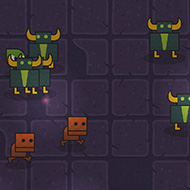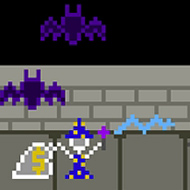








Dworf’s Forbidden Gold places the player in a layered underground setting filled with moving platforms, unstable structures, and treasure guarded by traps. The player guides a small character through paths that require calculated movement, attention to danger signals, and strong timing. The experience grows more demanding with each deeper layer, as hazards combine in ways that require careful correction and adaptability. Dworf’s Forbidden Gold emphasizes measured decisions rather than pure speed, creating a steady rhythm based on observation and controlled action.
Mining Paths, Trap Recognition, and Layer Progression
The core structure of Dworf’s Forbidden Gold revolves around navigating vertical shafts and branching tunnels. Each area contains traps such as falling debris, retracting floors, and pressure-sensitive hazards. Instead of memorizing a fixed path, players must read the environment and react appropriately each time. The tension comes from managing the balance between collecting valuable pieces and maintaining safety in spaces that leave little margin for error.
- Hazard scanning: Identify subtle signs like cracked tiles or loose stones before proceeding.
- Path commitment: Decide which direction offers safer conditions before entering deep tunnels.
- Escape readiness: Keep open routes available to retreat when hazards activate suddenly.
Collecting Gold, Environmental Pressure, and Risk Management
As Dworf’s Forbidden Gold advances, the environment shifts to include heavier traps and more frequent collapses. Gold pieces are often placed in risky locations, encouraging players to weigh the benefits of reward against the potential consequences of missteps. Some sections introduce moving hazards that require timing accuracy, while others rely on constant pressure created by narrow passages. The player must remain calm and manage risks carefully to maintain consistent progress.
- Reward evaluation: Consider whether high-value gold is worth entering unstable sections.
- Movement control: Use slow, precise steps when navigating small platforms.
- Pressure handling: Maintain steady pacing instead of rushing through dense hazard zones.
Common Questions, Practical Methods, and Strategic Depth
Players frequently ask how to handle deeper levels that contain overlapping hazards. A useful method is dividing each room into segments and tackling one section at a time. Another effective tactic is approaching gold clusters from safer angles rather than direct paths. Understanding timing patterns helps reduce unexpected triggers, especially when dealing with falling traps. Many of the most difficult areas become manageable once players internalize hazard timing and cross-room movement rhythm.
- Segment-based navigation: Break complex rooms into smaller steps to maintain focus.
- Angle adjustment: Approach gold clusters from side routes when possible.
- Timing familiarity: Practice observing trap cycles before crossing dangerous zones.
Dworf’s Forbidden Gold provides a structured challenge where precision, observation, and smart risk-taking shape each decision. As players gain confidence in reading patterns and managing hazards, they build the skill set needed to explore deeper layers and collect gold in even the most demanding conditions.