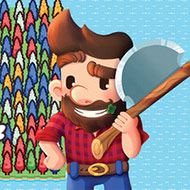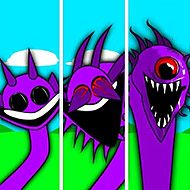








Chop Chains places the player in a controlled environment that revolves around slicing linked segments to produce chain reactions. Each action must be timed precisely, as cutting sections too early or too late may cause pieces to scatter unpredictably. The challenge lies in planning how each cut will influence the rest of the chain, allowing players to build momentum and clear segments efficiently. The experience rewards accuracy, rhythm, and strategic pacing rather than rapid input.
Chain Behavior, Cutting Mechanics, and Rhythm Planning
The fundamental structure of Chop Chains introduces segmented chains that react differently depending on where they are cut. Some segments fall, some bounce, and others slide across the environment. Understanding how each type behaves allows the player to set up stable reactions. Rhythm becomes important, especially when multiple chains appear simultaneously. Cutting in the correct order creates smooth sequences and reduces unexpected scatter.
- Segment analysis: Study how each chain behaves before performing cuts.
- Precision placement: Position the cutting point carefully to guide the reaction.
- Rhythmic slicing: Time each cut to maintain consistent flow between sequences.
Stage Variation, Layered Challenges, and Multi-Chain Management
As difficulty increases, Chop Chains introduces structures featuring overlapping chains and obstacles that deflect segments. Some levels include timing hazards or moving boundaries that require players to wait for the right moment to cut. Multi-chain stages demand higher planning, as one mistake may disrupt the entire sequence. Learning how segments interact is the key to completing complex layouts and maintaining control.
- Obstacle anticipation: Watch for moving objects that may redirect falling segments.
- Sequence order: Determine which chain should be cut first to maintain structure.
- Controlled delay: Wait for ideal timing rather than cutting impulsively.
Common Questions, Useful Tactics, and Player Guidance
Players often ask how to handle stages where chains overlap tightly. One effective method is mapping cuts from the top downward, preventing pieces from blocking future cutting zones. Another helpful approach involves focusing only on key segments, as not every connection must be cut immediately. Observing the chain’s overall shape helps identify potential pivot points that create smoother reactions. Once the player understands these structural patterns, difficult stages become more manageable.
- Top-down cutting: Begin with upper segments to prevent accidental obstruction.
- Key link targeting: Identify crucial sections that trigger the most efficient reactions.
- Shape recognition: Evaluate chain geometry to predict how segments will fall.
Chop Chains offers a strategic slicing experience that rewards thoughtful planning and pattern awareness. As players become more familiar with segment behavior and chain structure, they gain the ability to handle complex layouts and complete challenges with improved consistency.