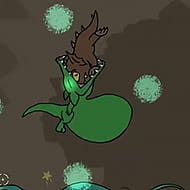








Fish Stick Protocol places the player inside a controlled environment where a small creature must navigate tight spaces, shifting platforms, and timed hazards. The structure focuses on movement decisions, reaction timing, and learning how the creature responds to every motion input. While the controls seem simple, the complexity arises from the way obstacles interact, forcing the player to think ahead and adjust to rapidly changing layouts that require attention and consistency.
Environment Logic, Movement Flow, and Obstacle Recognition
The early layout of Fish Stick Protocol introduces steady platform arrangements that help the player become familiar with movement rhythm. As depth increases, platforms shift unpredictably, barriers appear in clusters, and the creature must adjust to different heights or narrow passages. Each movement requires accuracy, and even a small delay may push the creature toward a hazard. Recognizing patterns in obstacle placement becomes an essential part of progress.
- Platform reading: Identify which blocks are stable and which move on a timed cycle.
- Hazard spacing: Watch for tight clusters that require precise landing points.
- Vertical navigation: Use controlled jumps to avoid over-shooting platforms.
Progression Structure, Layered Challenges, and Rhythm Control
As the experience continues, Fish Stick Protocol introduces multi-layered spaces that stack several hazards at once. These sections require players to react quickly while also planning for the next move. Some tasks encourage slow and deliberate pacing, while others force the player to move rapidly to avoid disappearing platforms. Understanding the rhythm of each mechanic is the key to maintaining momentum and reducing errors.
- Timing cycles: Observe how moving elements repeat in predictable loops.
- Reaction mapping: Position the creature where the next safe zone will appear.
- Speed balancing: Slow down at cluster sections and accelerate during open paths.
Frequently Asked Questions and Strategy Tips
Players often ask how to manage sequences where hazards stack on top of each other. A helpful tactic is focusing on one obstacle at a time while keeping the upcoming section in peripheral awareness. Another common concern involves tight timing cycles. Practicing small input adjustments helps the player maintain control and avoid unnecessary slips. Many challenges become manageable once the player develops a sense of the creature’s acceleration and stopping distance.
- Obstacle isolation: Mentally divide complex sections into smaller, manageable steps.
- Controlled movement: Tap directional inputs instead of holding them during narrow sequences.
- Practice intervals: Spend extra attempts observing patterns before attempting fast runs.
Fish Stick Protocol provides a layered environment where every movement matters and progress depends on timing, planning, and persistence. As players refine their approach, they begin navigating difficult layouts with greater stability and confidence.