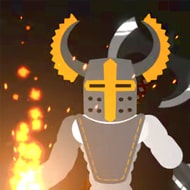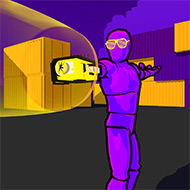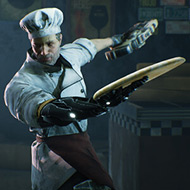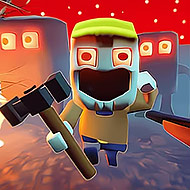








In Ragdoll Hit you start every match holding nothing but two loose arms and a starting position on the arena floor — no weapon in hand, no plan beyond reaching whatever’s lying nearby before your opponent does. That empty-handed opening moment matters more than it looks like it should.
| Genre | Physics-based combat |
| Controls | Move, jump, kick, pick up items |
| Progression | Coins unlock weapons and skins |
| Modes | Standard levels, boss battles |
Why the Empty-Handed Start Matters in Ragdoll Hit
Every arena scatters a handful of pickups near the center, and the first ten seconds of a match are usually a scramble toward whichever one is closest — a sword, a hammer, sometimes just a scythe left over from the last round. Players who rush straight at an opponent instead of grabbing a weapon first tend to lose that early exchange badly, since a bare-fisted punch does noticeably less than a swung hammer connecting at the same moment.
Kicks work differently from punches here. A kick has more knockback but a slower windup, which means it’s better used against an opponent who’s already off-balance rather than as an opening move.
Reading Ragdoll Momentum Before You Swing
Because every character in the game is a ragdoll, a hit doesn’t just deal damage — it changes the opponent’s position, sometimes dramatically. A hammer swing that connects clean can send someone tumbling off a raised platform entirely, ending the exchange without needing a second hit.
This is the part that separates casual players from people who’ve put real time into Ragdoll Hit: reading momentum means anticipating where a hit will send your opponent, not just landing the hit itself. A weak jab that knocks someone toward an environmental hazard is often worth more than a strong hit that leaves them standing in open space.
The environment itself gets used constantly by experienced players — ledges, hazards, and tight corners all turn an ordinary punch into a much bigger swing in position.
Weapon Choice: Swords, Hammers, and Scythes
- Swords hit fast with modest knockback, good for chaining multiple quick strikes
- Hammers are slow but send opponents flying, best used when an opponent is already cornered
- Scythes have long reach, useful for keeping distance against an aggressive rusher
Coins earned from wins unlock new weapon types and cosmetic skins, and while skins are purely visual, the weapon unlocks genuinely change how a match plays out once you’ve got a full loadout to pick from before each fight.
Boss Battles and Where Ragdoll Hit Gets Serious
Boss fights strip away the chaos of the early levels and demand real pattern recognition — bosses hit harder, recover balance faster after a knockdown, and punish the reckless charge that works fine against regular opponents. Players who treat a boss fight like a standard match usually get overwhelmed within the first few exchanges.
The difficulty spike at boss encounters is one of the more discussed parts of the game among players — some see it as a fair test of everything the earlier levels taught, others feel the jump from casual brawling to boss-level precision comes on too suddenly.
What Beginners Get Wrong in Ragdoll Hit
New players button-mash, throwing punches without waiting to see how the ragdoll physics resolve the last hit. Slowing down and watching an opponent’s stagger recovery before committing to the next attack fixes most early losses on its own.
What’s the best weapon for a beginner in Ragdoll Hit?
The sword is the easiest to use consistently — its fast swing and moderate knockback forgive imperfect timing better than the hammer’s slow windup does.
Can I use the environment against my opponent?
Yes, knocking an opponent toward a ledge or hazard with even a light hit often ends the exchange faster than a heavier hit landed in open space.
Are boss battles required to progress?
Yes, boss encounters gate progress between level groups, so building weapon familiarity in the standard levels beforehand makes them far more manageable.
Ragdoll Hit rewards patience in a way its chaotic look never suggests — the players who consistently win aren’t the ones swinging fastest, they’re the ones who watched where the last hammer swing sent their opponent and set up the next attack around that ledge or hazard instead of just charging back in.